
Corporate team-building golf is a shared outdoor activity designed to help colleagues connect through play rather than workplace tasks. A corporate team building golf outing needs a plan for mixed skill levels, voluntary participation, and time together beyond the scorecard; this 2026 guide shows you how to build one.
- Plan your corporate team building golf outing around participation, not individual scores.
- Boulder Creek Golf Club suits teams seeking public nine-hole golf and clubhouse dining in the Santa Cruz Mountains.
- Use a team scramble for mixed golf experience; give non-golfers a genuine alternative.
- Confirm group arrangements, equipment, accessibility, and dining before inviting your team.
Why this matters
A golf outing puts colleagues in a setting where job titles do not need to determine every conversation. But choosing golf does not automatically create team-building. Your format, group assignments, and expectations decide whether employees participate comfortably or spend the afternoon watching experienced golfers.
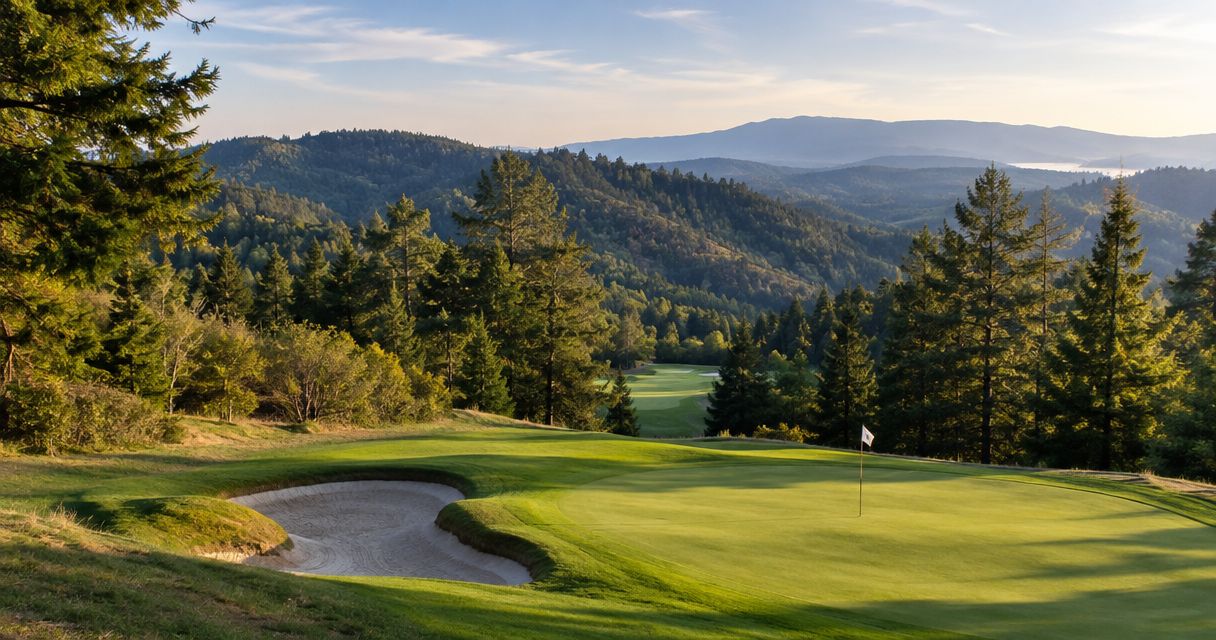
Boulder Creek Golf Club is best for teams seeking public nine-hole golf and clubhouse dining in the Santa Cruz Mountains. The club also offers disc golf, giving you another activity to consider when planning. Start with Boulder Creek Golf Club for the venue, then confirm the arrangements your group actually needs.
Treat the public course and dining options as a starting point, not evidence of a corporate event package. Group coordination, equipment arrangements, reserved dining space, and event staffing all need direct confirmation.
Why golf matters for corporate teams
Corporate teams need an outing that works for colleagues who arrive with different experience, confidence, and physical requirements. Golf creates a shared task, but individual stroke play also makes those differences visible. A team format changes the emphasis from who plays best to how the group makes decisions together.
A nine-hole course gives your event a defined playing scope. It does not guarantee a particular finish time: group size, pace, and course conditions still matter. For your 2026 plan, ask the venue about the expected schedule rather than building the invitation around an assumed duration.
The social portion matters just as much. Clubhouse dining gives your group a place to reconnect after separate playing groups finish, provided the dining arrangements fit your headcount and schedule. Plan the conversation as deliberately as the golf.
How to plan a corporate team building golf outing
1. Define the purpose before choosing the format
Write a one-sentence purpose in a shared planning document. Make it specific enough to guide decisions: helping new colleagues meet the wider team, bringing departments together, or giving an established group time away from routine work.
Keep the outcome within the event's control. An outing can create opportunities for conversation; it cannot prove that collaboration has improved simply because everyone attended. Avoid presenting golf scores or attendance as evidence of stronger working relationships.
Decide what you will ask afterward before you start booking. For example, ask whether employees met someone new, felt comfortable participating, and would choose the format again. That gives you useful feedback without turning a relaxed afternoon into another performance review.
- Write the event purpose in plain language.
- Name the employees the outing is intended to include.
- Decide whether participation is optional and communicate that clearly.
- Choose feedback questions tied to the event purpose.
- Assign one organizer to keep decisions and confirmations together.
2. Ask about experience and participation needs
Use a short email or form before selecting the activity. Ask about golf experience, interest in playing, equipment needs, and any arrangements employees want to discuss privately. Do not ask colleagues to explain medical conditions to the whole team.
Give beginners a clear description of the proposed round. A scramble, for example, lets teammates select a shot and continue together from that position. Explain that format without assuming everyone knows golf terminology or wants an introduction to the sport.
For your 2026 outing, distinguish interest from experience: an experienced golfer can prefer the meal, while a first-time player can want to join the round. The guide to golf courses for beginners near Santa Cruz offers another planning reference, but your employees' responses should determine the format.
- Ask whether each employee wants to play golf.
- Collect equipment needs without promising rentals.
- Offer a private route for discussing accessibility.
- Ask about dietary requirements for the shared meal.
- Explain the participation choices before requesting responses.
3. Match the venue to your actual requirements
Build a venue checklist in a spreadsheet before contacting courses. Separate essential requirements from preferences. A course that looks appealing still needs to fit your headcount, travel plan, participation needs, and meal arrangements.
Boulder Creek Golf Club offers public nine-hole golf, disc golf, and clubhouse dining. Those options make it a candidate for a corporate golf outing with a shared meal or a different activity choice. The limitation is straightforward: those offerings do not establish dedicated group coordination or confirm that every activity can fit your proposed schedule.
Ask the venue to confirm the current playing layout for your 2026 date. Do not plan around older references to additional holes or assume that restoration updates describe what your group can play now.
A confirmed group arrangement reduces the organizer's need to coordinate separate bookings. Keep responsibility for the invitation, participation choices, and internal communications with your own organizer.
- Share your expected headcount and proposed date.
- Confirm the current playable course layout.
- Ask how the venue handles multiple playing groups.
- Check equipment, cart, and accessibility arrangements directly.
- Confirm dining arrangements separately from course access.
4. Choose a format that includes beginners
Start with a simple format you can explain yourself. A team scramble is a practical choice when golf experience varies: teammates play their shots, choose a position, and continue from there together. Confirm the course's rules for group size and pace before adopting it.
For a four-player team, assign a scorekeeper and make clear that everyone can take part in decisions. Do not let the most experienced player become the only person whose suggestions count. Keep any competition secondary to the reason you organized the day.
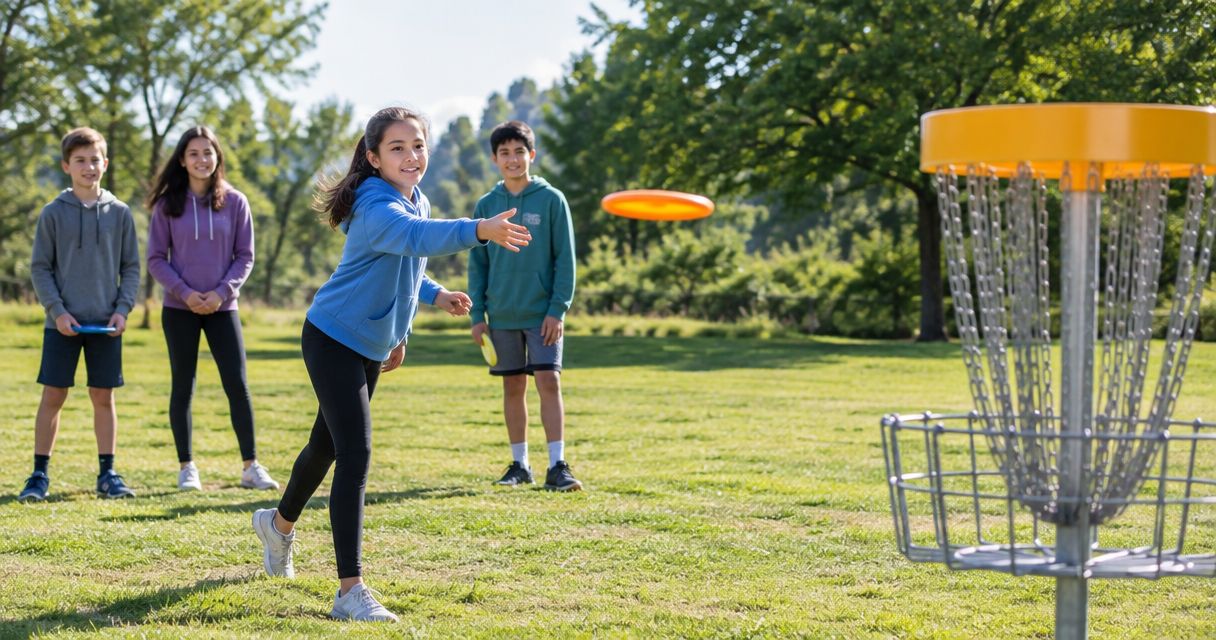
Individual stroke play suits colleagues who actively want individual competition. It is a poor default when several participants are learning the game during the outing. Disc golf is another option to discuss, not an automatic solution for every non-golfer; it still involves outdoor movement and unfamiliar skills.
- Write the format in plain language before the event.
- Confirm permitted group sizes with the course.
- Keep team assignments mixed across departments where practical.
- Let beginners ask questions without a public skills test.
- Agree on how groups should handle delays with course staff.
5. Build a schedule around confirmed timings
Draft the schedule manually, then adjust it after the venue confirms how your group will start and finish. Include travel, arrival, check-in, a short briefing, play, and the shared meal. The course's estimate should guide the playing window.
Reserve 15 minutes in your draft for explaining the format and participation choices. This is a planning allowance, not a promise about how long venue check-in takes. Move logistical instructions into the invitation so the briefing can stay simple.
For a 2026 corporate outing, publish both the meeting point and the planned finish. Employees need to arrange their working day and responsibilities outside work. Do not treat an open-ended evening as a harmless extension of the event.
Avoid scheduling a formal presentation immediately after the expected final putt. Groups do not necessarily finish together, and late arrivals should not have to interrupt a meeting.
- Ask the venue for an appropriate arrival window.
- State the meeting point and transport arrangements.
- Include a short format and safety briefing.
- Leave room between the round and shared dining.
- Publish a planned finish and a clear departure arrangement.
6. Make the shared meal inclusive
Plan the meal as the point where the whole team reconnects, including colleagues who did not play golf. Ask about dining arrangements before you describe the meal in the invitation. Confirm dietary requirements privately and pass necessary details to the venue with employees' consent.
Keep conversation prompts light. Ask what someone learned about a colleague or which team decision stood out. Avoid asking employees to deliver a lesson about leadership in front of the group; an outing does not need to become a workshop to have a purpose.
Give the meal its own place in the schedule rather than treating it as an optional extra for anyone still around. If joining only for dining is an option, explain the arrival time and meeting point as clearly as you explain the golf.
- Confirm the dining headcount separately from the playing headcount.
- Check how dietary requirements will be handled.
- Invite non-golfers to the shared social portion.
- Keep any recognition focused on participation, not just scores.
- Avoid making alcohol part of the participation expectation.
7. Confirm the plan and collect useful feedback
Send one final event brief containing the decisions employees need. Use the same document for the organizer's checklist, but keep private information out of the team-wide version. A clear brief is more useful than several messages with different instructions.
Set a decision process for weather or course changes. Confirm who will contact the venue and how employees will receive an update. Do not invent a cancellation deadline or imply a venue policy that has not been confirmed.
After the event, send three feedback questions: did you feel included, did you connect with a colleague, and what should change next time? Treat the responses as feedback on the event design, not proof of a business result.
- Confirm arrangements in writing.
- Share arrival instructions and the event contact.
- Explain the weather decision process.
- Send three feedback questions after the outing.
- Record changes before planning the next event.
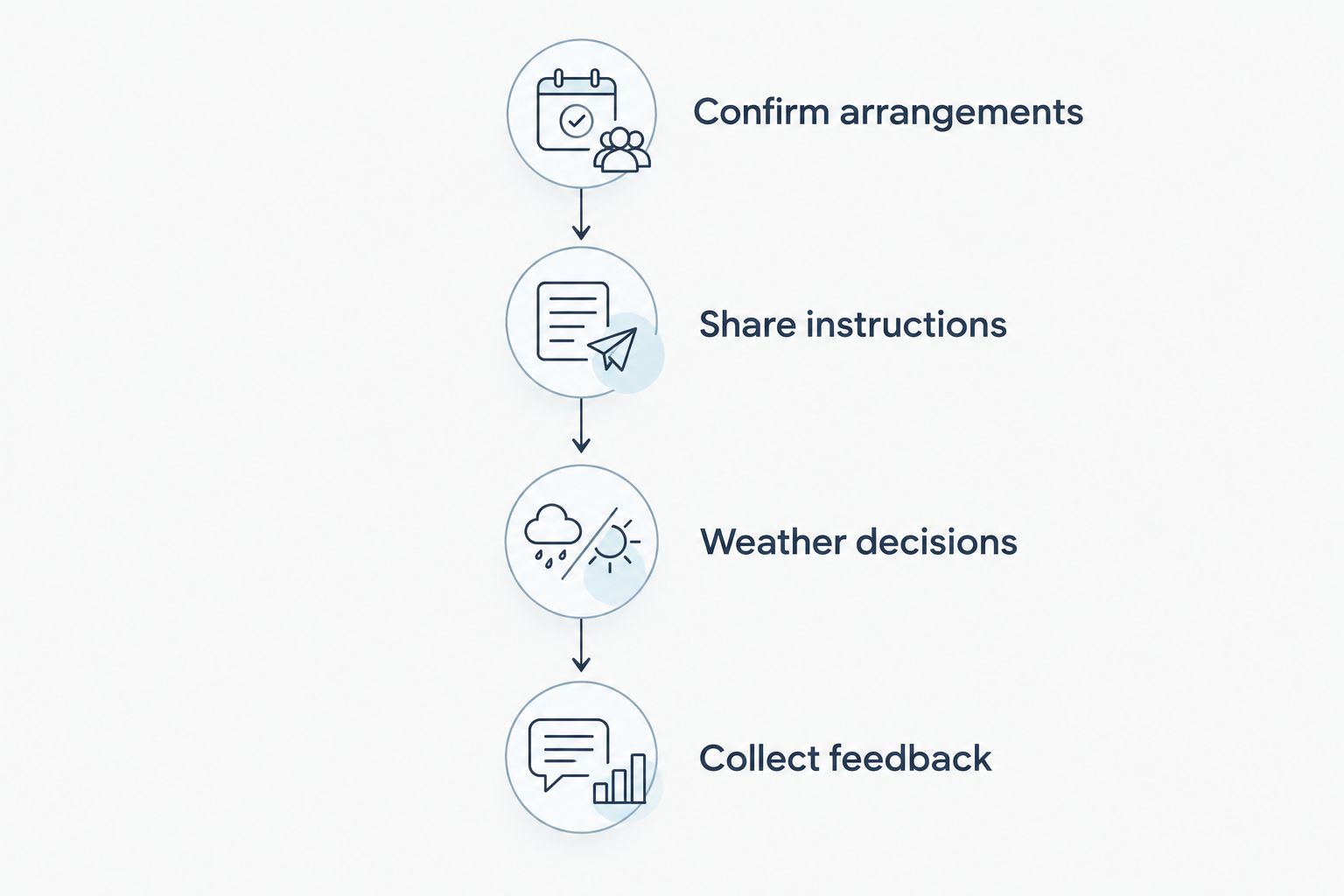
The organizer's final sequence is simple: confirm arrangements, share instructions, explain weather decisions, then collect feedback. Keep each action with a named owner.
Compare outing formats for your team
Choose the activity by participation needs, not by the organizer's favorite sport. The options below describe event formats, not confirmed venue packages. Check each arrangement before committing your team.
| Option | Best for | Main advantage | Key limitation |
|---|---|---|---|
| Nine-hole team scramble | Mixed-experience colleagues who want golf | Shared shot selection keeps the activity team-based | Beginners still need a format briefing and equipment arrangements |
| Individual stroke play | Golfers who want individual competition | Each participant plays and records an individual round | Skill differences become central to the experience |
| Disc golf outing | Colleagues who prefer throwing discs to playing golf | Offers a different outdoor activity | Walking requirements and unfamiliar skills still need consideration |
| Golf followed by shared dining | Teams with both golfers and non-golfers | Gives everyone a common gathering point | Requires separate coordination of play and dining |
| Dining-only gathering | Teams prioritizing conversation over sport | Removes the need to learn an activity | Does not provide the shared playing experience |
Choose a scramble only when your participants want to play. A dining-only gathering is a better fit than reluctant participation dressed up as team-building.
Common mistakes corporate teams make
Turning the outing into a skills contest
A longest-drive focus or individual leaderboard puts golf ability at the center of the day. If your purpose is connection, choose team decisions and shared participation instead. Keep competitive elements optional rather than making them the event's main measure of success.
Calling every non-golfer a beginner
Some employees do not want to play. Others have participation requirements that a simpler golf format does not address. Offer a real alternative and give it the same clear instructions as the round.
Assuming course access includes event management
Public golf access does not establish a hosted corporate package. Confirm who handles group starts, equipment questions, dining, and schedule changes. An unanswered logistical question still belongs to your organizer.
Planning from an old course description
Use the current nine-hole description for Boulder Creek Golf Club and confirm conditions for your date. For the 2026 invitation, describe only the playing arrangement the venue has confirmed. Do not substitute a historical scorecard or restoration announcement for current information.
Keeping departments together all afternoon
Familiar groups make introductions easier to avoid. Mix departments where practical, while accounting for participation needs and employee preferences. Give colleagues room to talk without forcing structured personal disclosures.
FAQ
What's the best format for a corporate team building golf outing?
A team scramble is a practical choice for mixed-experience colleagues who want to play golf. Teammates choose a shot position and continue together, but beginners still need a clear briefing and appropriate equipment arrangements.
Can employees who don't play golf join the outing?
Yes, non-golfers can join the shared dining portion when you arrange it as part of the event. Offer participation choices before booking, and do not assume every non-golfer wants to try golf.
Is nine-hole golf suitable for corporate team-building?
Nine-hole golf gives a corporate outing a defined playing scope with room to plan a separate social portion. Confirm the expected playing window with the venue rather than promising a fixed finish time.
Does Boulder Creek Golf Club offer activities besides golf?
Boulder Creek Golf Club offers disc golf and clubhouse dining alongside its public nine-hole golf course. Confirm how those options can fit your group's date, headcount, and participation needs.
Should a corporate golf outing use individual scores?
Use individual scores only when participants want individual competition. For a connection-focused outing with mixed golf experience, a shared team format better matches the event's purpose.
What should I confirm before booking a corporate golf outing?
Confirm group arrangements, the current playing layout, equipment needs, accessibility, dining, and the weather decision process. Public course access alone does not confirm a dedicated corporate event package.
How do I know whether the team-building outing worked?
Ask employees whether they felt included, connected with a colleague, and would change anything about the format. Those answers evaluate the outing without treating attendance or golf scores as proof of improved business performance.
One last thing
Your most useful planning question is not who plays golf; it is who wants to participate in which part of the day. Ask it before booking. You will get a clearer headcount, a more honest activity choice, and fewer assumptions hidden inside the invitation.
Keep the final plan simple: a confirmed activity, clear participation choices, and a shared gathering point. That is enough structure to give colleagues time together without making the afternoon feel like another assignment.