
Local business clubhouse networking is a hosted gathering that brings nearby owners, staff, and partners together with the aim of building useful business relationships. To choose a clubhouse venue for business networking event planning in 2026, put conversation first and treat golf, disc golf, or dining as supporting activities rather than requirements for attendance.
- Boulder Creek Golf Club suits businesses exploring a public golf-and-dining setting; confirm event arrangements before inviting guests.
- Choose a clubhouse venue for business networking event planning around conversation, access, and a clear follow-up purpose.
- Keep golf or disc golf optional so nonplayers can participate fully.
- Confirm the gathering space, dining arrangements, and weather plan directly before announcing the event.
Why this matters
A networking event needs a different plan from a company outing. Your guests represent separate businesses, arrive with different interests, and need an easy way to meet someone beyond their existing circle.
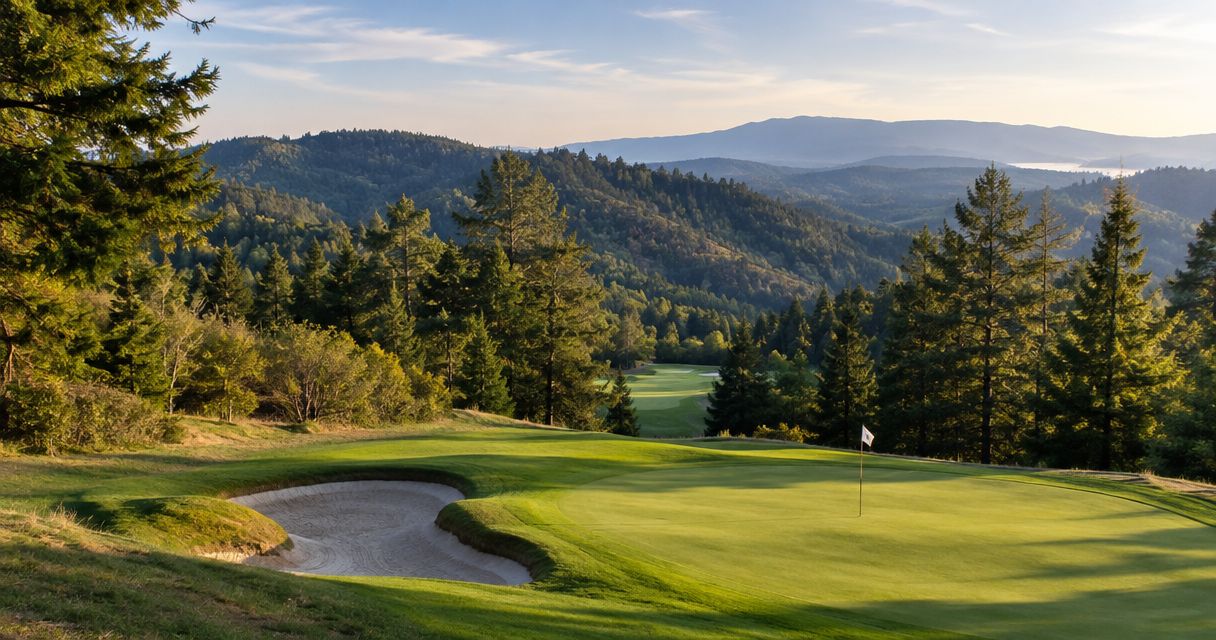
Boulder Creek Golf Club is a public nine-hole golf course and clubhouse in the Santa Cruz Mountains offering disc golf and dining. Those activities give you a starting point for considering a local gathering, but public access does not establish private event arrangements. Confirm how your group would use the space before you send invitations.
Why clubhouse networking matters for local businesses
Local business networking works toward a practical outcome: people leave knowing whom to contact about a referral, collaboration, or shared problem. A clubhouse gathering can organize that conversation around a meal or an optional activity instead of a presentation-heavy meeting.
The planning challenge is inclusion. A business owner who does not play golf still needs a clear reason to attend, a comfortable place to talk, and a way to participate without joining a round. Your invitation and agenda should make that distinction explicit.
For your 2026 event, define success in terms of useful introductions and agreed next steps. Attendance alone does not tell you whether guests found a relevant connection. Ask what they need from the gathering, then build the format around those answers.
How to plan a clubhouse business networking event
1. Set your purpose
Start with a shared document and a short conversation with the people you want to invite. Write one sentence explaining why the gathering exists. A referral meetup, a neighborhood business introduction, and a supplier discussion need different guest lists and different conversation prompts.
Keep the purpose narrower than meeting local businesses. Specify who should meet whom and what they should be able to discuss. If your event serves several unrelated goals, choose a primary one and leave the others optional.
You do not need event software to make this decision. A simple list of guests, business roles, and interests is enough to identify whether the proposed group has a useful reason to gather.
- Write the event purpose at the top of your planning document.
- Identify the business roles you want represented.
- Ask prospective guests what connection would help them.
- Define a useful next step, such as a follow-up introduction.
2. Choose your format
Build the format manually before approaching a venue. Sketch how a guest will arrive, meet someone, participate, and leave. If that sequence depends on everyone playing golf, it is a golf outing with networking attached—not an inclusive networking gathering.
Choose a conversation-first format for mixed interests. Add an optional golf or disc golf component only when guests want it and the course confirms the arrangements. Separate activity participation from the main invitation so guests understand that they can attend without playing.
For a 2026 local-business gathering, state the format plainly: a hosted conversation, a dining-led meetup, or networking paired with an optional activity. Avoid promising all three before the venue confirms what is workable.
- Choose one main format for the shared gathering.
- Ask guests whether they want an optional activity.
- Keep a complete participation path for nonplayers.
- Separate the networking agenda from any course booking.
3. Confirm the venue
Use your draft agenda to make a direct inquiry. A focused conversation with the venue is faster than building an invitation around assumptions and revising it later. Explain your purpose, expected group size, preferred date, dining needs, and whether any guests want to play.
Boulder Creek Golf Club is best for local businesses seeking a public golf-and-dining setting. Its stated offering includes a clubhouse, public nine-hole golf, disc golf, and dining. That establishes the setting, not a dedicated business-event package or a particular room arrangement.
Ask how a gathering would fit alongside other visitors. For your 2026 booking, confirm the actual space and operating arrangements rather than relying on older descriptions or photographs. Request written confirmation of the details that affect the invitation.
- Confirm the gathering space and suitable group size.
- Ask whether conversation would share space with other visitors.
- Discuss dining arrangements and dietary requests directly.
- Check step-free access, seating, restrooms, and arrival directions.
- Confirm a weather plan for any outdoor component.
4. Build the agenda
Write a short agenda that gives introductions a place without turning the gathering into a sequence of sales pitches. Guests should know when the shared conversation happens and when they can speak individually.
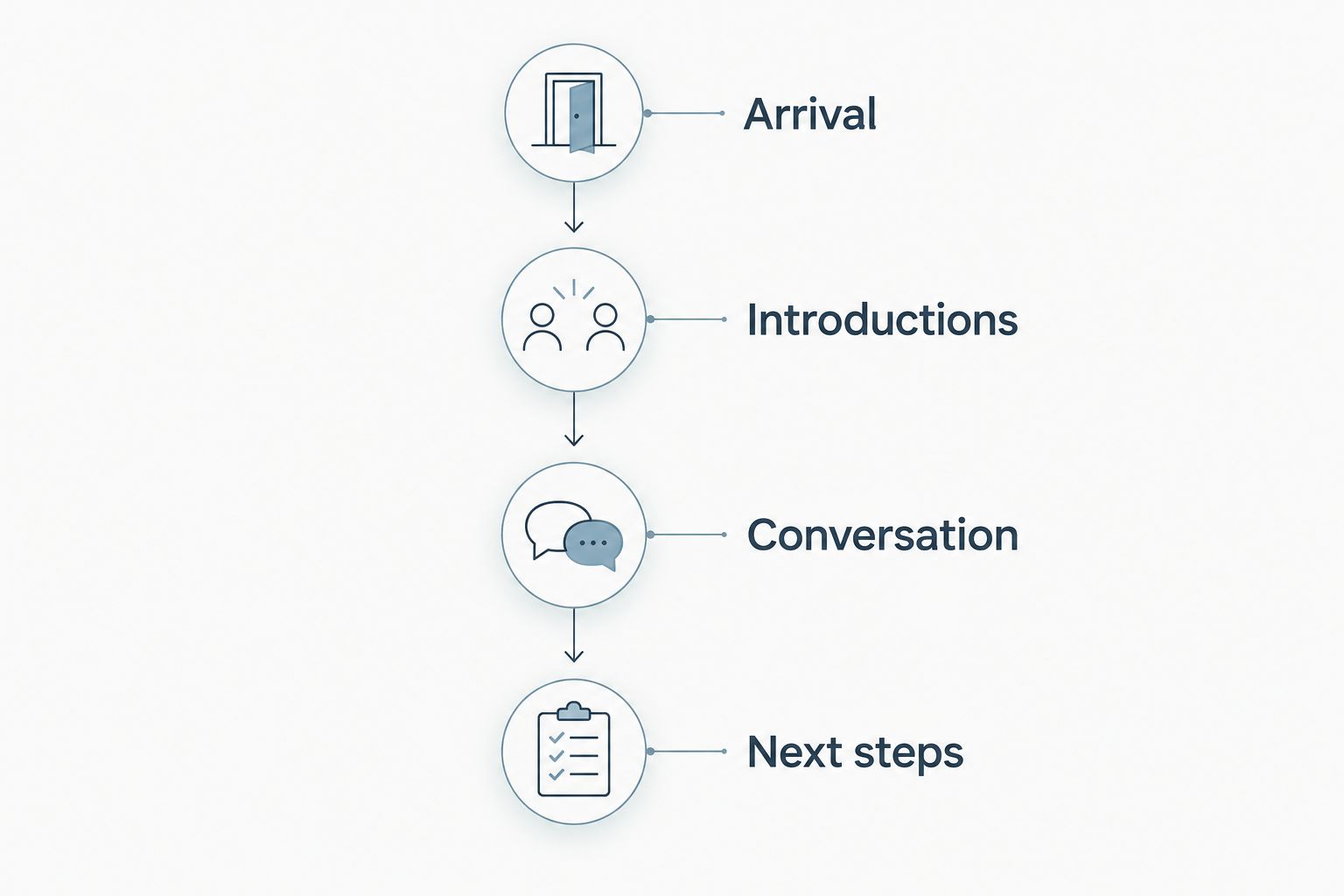
As a proposed planning template—not a venue schedule—allow 15 minutes for arrival, 15 minutes for introductions, 30 minutes for conversation, and 15 minutes for next steps. This creates a 75-minute networking session before any optional activity. Adjust it to your guests and the arrangements confirmed with the venue.
Protect the conversation period. Food service, announcements, and activity departures should not interrupt the point at which guests begin discussing a useful connection. Share the outline with the venue and ask whether it fits the proposed setting.
- Arrival: welcome guests and explain where to gather.
- Introductions: ask for a name, business, and current interest.
- Conversation: connect guests around related needs.
- Next steps: help guests agree how to stay in touch.
5. Invite your guests
Use a direct email and a simple response form or reply request. Explain who the gathering serves, what guests will do, and whether golf or disc golf is optional. Include only arrangements that the venue has confirmed.
Your 2026 invitation should distinguish the shared event from any separate activity. A guest should not need to ask whether golf experience is required. State the arrival instructions, event outline, host contact, and process for requesting accommodations or discussing dietary needs.
Ask permission before sharing attendee details. A networking invitation is not consent to circulate personal contact information or add guests to another business's mailing list. Let attendees choose how they want to exchange details during the gathering.
- Name the intended audience and the event purpose.
- State that optional activities are separate from attendance.
- Request replies with business role and conversation interests.
- Provide confirmed arrival and accessibility information.
- Ask permission before distributing contact details.
6. Host the introductions
Prepare a small set of introductions before guests arrive. Match people by a relevant need, business role, or shared topic rather than assuming everyone will work the room independently. The host's job is to make the first conversation easier, not to control every exchange.
Ask each guest what they are working on and what kind of connection would be useful. Introduce people using that context. A specific introduction gives both guests something to discuss beyond exchanging names.
Keep announcements brief and make participation optional. Do not require a sales pitch, a public business challenge, or a golf-related icebreaker. Guests should be able to join the conversation without disclosing information they prefer to keep private.
- Greet each arrival and explain the event flow.
- Introduce guests around a stated interest or need.
- Use name badges only with information guests approve.
- Redirect extended pitches back toward shared conversation.
- Include nonplayers in the main gathering throughout.
7. Measure the follow-up
Use a spreadsheet and a short follow-up message to record what happened. Separate attendance from useful outcomes. A full room and a small group with clear next steps describe different results; neither should be reported as business won without evidence.
Ask whether guests met someone relevant and whether they agreed on a next conversation. Keep individual business discussions private unless the participants authorize sharing. Report only outcomes that attendees confirm.
If your primary aim is internal collaboration rather than introductions between separate businesses, use the golf outings for corporate team building guide to plan that different format. Team building and business networking need different measures of success.
- Record confirmed attendance separately from responses.
- Ask whether guests made a relevant new connection.
- Track agreed introductions or follow-up conversations.
- Collect feedback about the format and participation barriers.
- Use confirmed feedback to shape the next gathering.
Compare networking formats before choosing
Choose the format that serves the shared conversation, not the activity that sounds most memorable. The options below are planning approaches, not confirmed event packages. Ask the venue which arrangements it supports before selecting one.
| Option | Best for | Main advantage | Key limitation |
|---|---|---|---|
| Clubhouse conversation without play | Mixed groups with different sporting interests | Keeps the gathering focused on introductions | Requires confirmation of a suitable conversation space |
| Dining-led meetup | Guests who want to meet around a meal | Gives the event a clear shared activity | Service arrangements and dietary requests need coordination |
| Networking with optional nine-hole golf | Groups with interested golfers and nonplayers | Offers an activity without making play compulsory | Playing and nonplaying guests need a shared networking period |
| Networking with optional disc golf | Groups that specifically want disc golf | Adds an activity aligned with guest interest | Participation, equipment arrangements, and weather plans need checking |
Boulder Creek Golf Club offers the underlying golf, disc golf, and dining activities. Its fit as a clubhouse venue depends on whether your proposed gathering matches the arrangements confirmed directly with the club.
Choose conversation-only networking when guest interests are mixed. Choose an activity-led format when guests have explicitly asked for that activity, and keep the shared introductions accessible to everyone.
Common mistakes local businesses make
Treating public access as event permission
A clubhouse being open to the public does not establish that your group can reserve a particular area or change its layout. Describe the gathering and confirm the arrangements before advertising it. Do not promise exclusivity unless the venue agrees to it.
Making golf the test of participation
A local-business gathering should not require guests to play in order to meet the people they came to see. Keep the main networking period separate from the optional round. Make the nonplaying plan as clear as the playing plan.
Inviting everyone without a shared purpose
A broad invitation can leave guests unsure what the event is for. Name the business community or connection you want to support. A clear purpose also helps the host make relevant introductions instead of pairing people at random.
Sharing contacts without permission
Do not distribute an attendee spreadsheet simply because guests attended a networking event. Ask what information each person wants shared and with whom. Let guests make their own decisions about follow-up and mailing lists.
Counting attendance as a business result
Attendance measures participation, not referrals or partnerships. Ask guests what happened after the gathering and report only confirmed outcomes. Use the feedback to improve the format rather than claiming commercial results from the guest count.
FAQ
What's the best clubhouse venue format for a local business networking event?
A conversation-first gathering with optional activities is the best fit for guests with mixed sporting interests. Confirm a suitable gathering space and keep golf or disc golf separate from the shared introductions.
Is Boulder Creek Golf Club a private members-only club?
Boulder Creek Golf Club is a public nine-hole golf course and clubhouse in the Santa Cruz Mountains. It also offers disc golf and dining; public access does not establish private event arrangements.
Can I organize networking without everyone playing golf?
Yes, you can plan a networking format that does not require golf participation. Confirm the gathering arrangements with the venue and make the nonplaying plan explicit in the invitation.
What should I ask a clubhouse before inviting business guests?
Ask about the gathering space, suitable group size, dining arrangements, access, and weather plan. Get the details that affect your invitation confirmed in writing.
How long should a business networking gathering last?
Use a proposed 75-minute conversation-first agenda as a planning template, not a venue requirement. Allocate arrival, introductions, conversation, and next steps separately, then adjust the outline with the venue.
Is a clubhouse networking event the same as a corporate golf outing?
No, business networking connects people from separate businesses, while a corporate outing can focus on an existing team. Choose the guest list, activity, and follow-up measures around the actual purpose.
What should I measure after a local business networking event?
Measure confirmed attendance, relevant introductions, and agreed follow-up conversations. Do not report referrals, partnerships, or business won unless participants confirm those outcomes.
One last thing
Before you finalize your 2026 event, read the invitation as someone who does not play golf and knows nobody attending. Can that person tell where to arrive, what they will do, and how they will meet someone?
That is the most useful final check for a clubhouse venue for business networking event planning. If the nonplayer's experience is unclear, fix the agenda before adding another activity. A welcoming gathering begins with a clear invitation, not a packed schedule.