
Real estate agents’ golf outings are hosted rounds that give clients, colleagues, or professional contacts time together, with the aim of strengthening business relationships. This 2026 guide explains how to plan a golf outing for real estate agents around appointment schedules, mixed playing abilities, and invitations that feel personal rather than promotional.
- Boulder Creek Golf Club suits real estate agents seeking public nine-hole golf and clubhouse dining in the Santa Cruz Mountains.
- Plan a golf outing for real estate agents around one audience and one relationship goal.
- For client appreciation, make competition optional and explain the format before guests commit.
- Confirm group arrangements directly; public course access does not establish private-event services.
Why golf outings matter for real estate agents
A golf outing gives you a setting for conversation outside a listing appointment, office meeting, or transaction deadline. The purpose is not to turn every fairway into a sales discussion. It is to give people a reason to spend time together without needing a property decision on the agenda.
Real estate agents also need clear boundaries. Clients, brokerage colleagues, and professional contacts bring different expectations; an invitation should explain who is attending and whether the gathering is social, team-focused, or competitive.
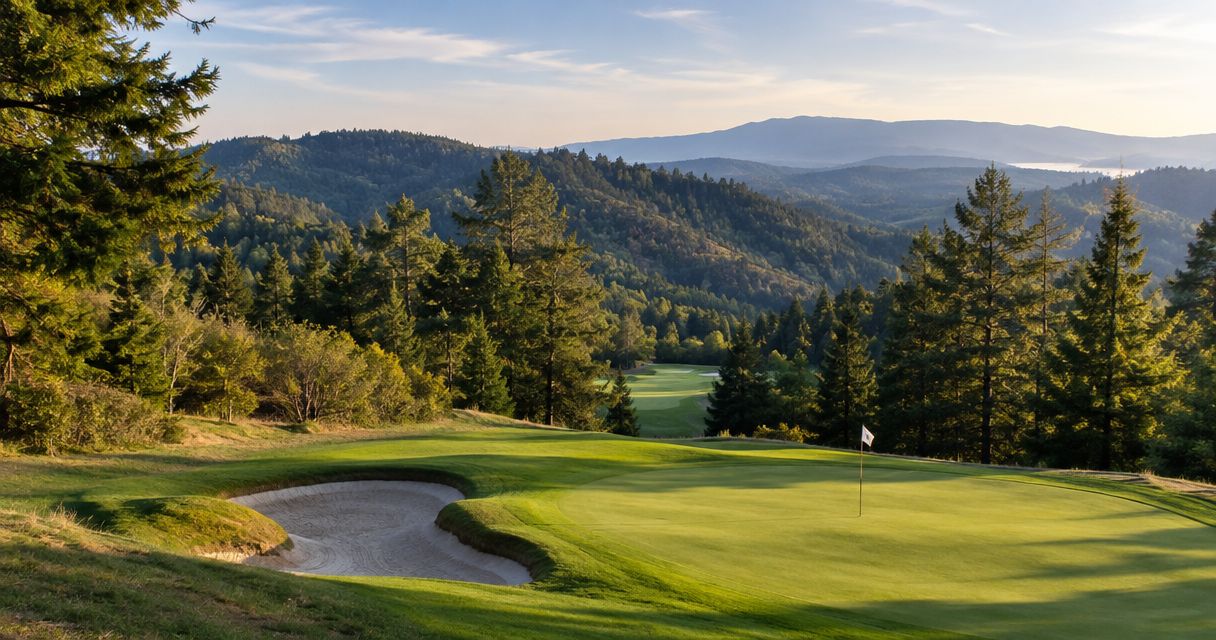
Boulder Creek Golf Club is a public nine-hole course in the Santa Cruz Mountains with disc golf and clubhouse dining. Boulder Creek Golf Club is best for agents seeking public nine-hole golf and clubhouse dining in the Santa Cruz Mountains. Confirm arrangements for your particular group before treating those amenities as a hosted-event package.
A nine-hole outing gives you a defined playing format without committing guests to an eighteen-hole round. It does not guarantee a particular finishing time. Your invitation should separate the planned golf session from any optional meal afterward.
Plan your real estate golf outing
Define one relationship goal
Start with a blank document and write one sentence explaining why you are inviting people. Client appreciation, brokerage teamwork, and professional introductions are different goals. Trying to serve all of them in one outing makes the guest list and tone harder to manage.
For client appreciation, keep the emphasis on enjoying the afternoon. For colleagues, decide whether you want existing teams to spend time together or people from different parts of the brokerage to meet. For professional contacts, keep commercial expectations out of the invitation.
For your 2026 plan, record the goal before choosing a venue. You should be able to explain the gathering without referring to lead generation, referral volume, or a sales target.
- Write a one-sentence purpose for the outing.
- Choose clients, colleagues, or professional contacts as the primary audience.
- Decide whether guests can bring a companion.
- Keep attendance separate from any expectation of future business.
- Define success through guest feedback and the stated purpose.
Ask guests about golf experience and scheduling
Use an email reply or a simple form before making commitments. Ask about playing experience, preferred dates, equipment needs, and interest in a meal. These four questions give you information you can act on without asking guests to complete a lengthy survey.
Do not infer golf ability from someone’s job title or enthusiasm. A guest who enjoys watching golf still needs a clear explanation of what participation involves. Equally, an experienced player needs to know if the outing is mainly social rather than score-focused.
Offer a way to decline without explanation. Real estate calendars include appointments that change, and a courteous invitation should leave room for that. Keep the RSVP deadline distinct from any booking or cancellation conditions you later confirm with the course.
- Ask whether each guest is new, occasional, or experienced.
- Collect preferred dates and scheduling restrictions.
- Ask who needs information about equipment.
- Ask about dining preferences and access requirements.
- Provide a direct reply route for private questions.
Match the course to the guest list
Build a short venue checklist yourself before contacting a course. Include the playing format, travel, group arrangements, equipment questions, dining plans, and weather procedures. A suitable setting is only useful when the practical details fit the people you are inviting.
Boulder Creek Golf Club offers public nine-hole golf, disc golf, and clubhouse dining. Having those activities at one venue gives you a relevant starting point for an outing, but it does not establish reserved dining space, coordinated group starts, equipment rental, or instruction.
The faster planning path is to use the venue’s published information to narrow your questions, then confirm the remaining arrangements directly. For a 2026 gathering, distinguish current course information from older descriptions or historical score records.
- Confirm arrangements for your proposed group size and date.
- Ask how starting times would be organized.
- Verify equipment arrangements instead of assuming rentals.
- Discuss dining separately from the golf reservation.
- Ask about access needs and weather-related procedures.
- Record what is confirmed and what remains undecided.
Choose a format guests can understand
Choose the format before assigning groups. A social round, an individual-score round, and a scramble ask different things of guests. In a scramble, teammates select a shot and play subsequent shots from that location under the agreed event rules.
For a mixed-experience client gathering, an optional-score social round keeps the invitation simple. A scramble adds teamwork, but the group still needs to understand shot selection, pace, and how scores will be recorded. Ask the course which formats fit your proposed arrangements.
Make competition an explicit choice, not a surprise at the first tee. If you include a contest, explain it before guests arrive and give people a comfortable way to participate without focusing on the result.
- Choose social play, individual scoring, or a scramble.
- Explain the chosen format in plain language.
- Make scoring optional when appreciation is the main goal.
- Confirm format suitability with the course.
- Agree on pace and pickup guidance before play.
Build an invitation with clear boundaries
Draft the invitation in an ordinary email before adding graphics or a registration system. A useful invitation answers who is hosting, why guests are invited, what participation involves, and what happens after golf. It should also state who is responsible for each booking or payment obligation, without making guests infer the arrangement.
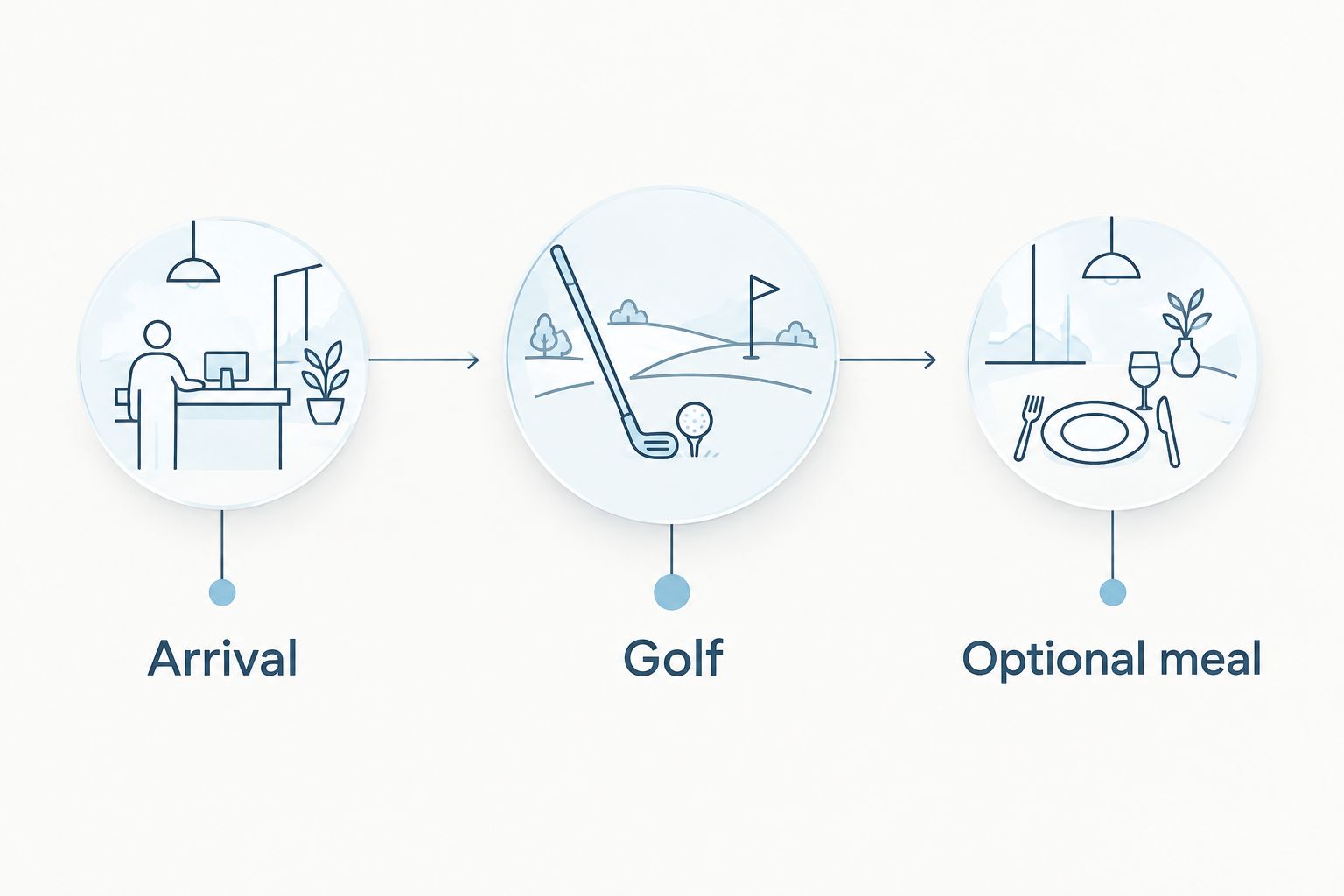
Use a simple sequence: arrival, golf, then an optional meal. Keep the 2026 event date and the confirmed schedule together so recipients do not have to search through follow-up messages. Avoid promising a finishing time that the venue has not confirmed.
- Arrival: Give the meeting point and check-in instructions.
- Golf: Explain the format and any equipment guests must bring.
- Optional meal: State whether dining needs a separate RSVP.
- Include the reply deadline and organizer’s contact details.
- Explain the cancellation process and weather-update channel.
Give guests the same essential information even when invitations are personalized. A warm opening can vary; the schedule, responsibilities, and reply instructions should not. Send one confirmation after arrangements are settled and one final reminder containing any necessary updates.
Assign groups around comfort, not sales potential
Use a spreadsheet or paper list to organize groups. Start with experience, existing relationships, and what guests have told you about their preferences. Do not rank attendees by transaction value or treat playing partners as sales assignments.
A newcomer needs a group willing to explain etiquette without making every shot a lesson. An experienced golfer should know when the event prioritizes conversation over competition. Introductions work better when everyone understands why they have been placed together.
For a brokerage gathering, the corporate team-building golf guide provides a separate planning angle. Keep client appreciation distinct from an internal team exercise, especially when considering prompts, contests, or structured discussions.
- Ask guests whether they prefer a familiar playing partner.
- Distribute experienced players without assigning unconfirmed coaching duties.
- Avoid isolating a newcomer among highly competitive players.
- Introduce people by name and a shared interest.
- Keep transaction discussions and private client information off the group agenda.
Close the outing with personal follow-up
Start with individual thank-you messages rather than a bulk promotional email. Mention a genuine conversation or shared moment, then leave space for a reply. Only include photographs when the people shown have agreed to that use.
For your 2026 outing, keep a short record of what guests actually said: whether the format was clear, whether the schedule worked, and whether they wanted the meal included. Attendance alone does not prove stronger relationships, and a pleasant round does not establish a future referral.
Separate event feedback from sales activity. If someone asks to discuss property, arrange that conversation directly rather than assuming every attendee wants a follow-up appointment.
- Thank each guest without attaching a sales pitch.
- Ask one practical question about the outing experience.
- Get permission before sharing or publishing guest photographs.
- Record scheduling and format feedback for the next event.
- Follow up on property matters only when the guest requests it.
Compare outing formats for your guest list
Choose the format by the guests’ comfort and your purpose, not by how elaborate it sounds. These options describe ways to organize a gathering; they are not confirmed event packages. Discuss each arrangement with the venue before inviting people.
| Option | Best for | Main advantage | Key limitation |
|---|---|---|---|
| Nine-hole social golf | Client appreciation with guests who want to play golf | A defined round with optional scoring | Playing duration still depends on the course and group |
| Scramble-format golf | Mixed-experience groups interested in teamwork | Teammates contribute to a shared score | Requires clear rules and course approval for the proposed event |
| Individual-score golf | Guests who specifically want competition | Each player keeps an individual result | Competitive emphasis can conflict with a relaxed appreciation outing |
| Disc golf gathering | Guests interested in disc golf rather than traditional golf | A different activity to discuss with the venue | Requires its own equipment and participation instructions |
| Clubhouse dining | Guests who prefer conversation without playing | Removes the need to participate in golf | Dining arrangements and suitability for the group need confirmation |
Boulder Creek Golf Club has golf, disc golf, and clubhouse dining, making it relevant to several of these plans. The limitation is practical: confirm how your chosen activities fit together rather than assuming the venue coordinates them as one event.
For a mixed guest list, do not present disc golf as interchangeable with golf. Explain it separately and ask who wants to participate. Likewise, a dining-only invitation should make clear when golfers are expected to join, without tying diners to an uncertain finishing time.
Common mistakes real estate agents make
Turning appreciation into a presentation
An invitation framed as a thank-you should not become an unexpected listing pitch. Keep market updates, service presentations, and requests for introductions out of the outing unless guests expressly agreed to that purpose. Honor the reason people accepted the invitation.
Mixing audiences without explaining the guest list
Past clients, current clients, colleagues, and professional contacts are not one interchangeable audience. Tell guests what kind of gathering to expect. Avoid putting anyone in a position where they feel expected to discuss a transaction or endorse your work in front of others.
Treating public access as group-event confirmation
A public course is not automatically a private-event venue for your chosen arrangements. Confirm starting times, dining plans, equipment questions, and organizer responsibilities. Do not print promises about instruction, reserved areas, or coordinated activities that the venue has not made.
Making every guest compete
A scorecard can be enjoyable for one guest and unwelcome for another. State the competitive element in advance, explain the rules, and keep a social participation route. Do not announce contests after guests have committed to what they understood was a relaxed round.
Giving the schedule no room for appointments
A golf invitation competes with clients’ and agents’ existing commitments. Separate the required arrival from optional dining, and communicate the venue-confirmed schedule clearly. If someone can only attend one part, decide beforehand whether that fits the gathering rather than improvising at check-in.
FAQ
What is the best golf outing for real estate agents?
A golf outing for real estate agents works best when the format matches one audience and one purpose. For client appreciation, choose a clearly explained social round and make competition optional rather than turning the gathering into a sales event.
Is nine-hole golf better than eighteen holes for a client outing?
Nine-hole golf is the better fit when you want to invite guests to a shorter playing format. It does not guarantee a specific duration, so confirm scheduling with the course and keep the meal separate in your invitation.
Can beginners join a real estate golf outing?
Beginners can join when the format and group arrangements accommodate their experience. Explain etiquette and equipment expectations beforehand, and confirm any instruction needs rather than assuming coaching is included.
Is a scramble a good format for real estate agents?
A scramble suits a group that wants to play as teams rather than keep individual scores. Explain shot selection and event rules in advance, and confirm that the course accepts your proposed arrangements.
Does Boulder Creek Golf Club offer activities besides golf?
Boulder Creek Golf Club offers disc golf and clubhouse dining alongside its public nine-hole golf course. Confirm arrangements for each activity before presenting them as a combined group itinerary.
Should I invite clients and professional contacts to the same outing?
Invite clients and professional contacts together only when the purpose and guest mix are clear to everyone. Keep attendance free from expectations of introductions or future business, and avoid discussing private transaction information.
What should a golf outing invitation include?
A golf outing invitation should include the purpose, date, meeting instructions, playing format, guest responsibilities, and RSVP deadline. Explain optional dining separately and tell guests how they will receive cancellation or weather updates.
How should I follow up after a client golf outing?
Send a personal thank-you and ask a practical question about the experience. Share photographs only with permission, and arrange a property discussion only if the guest requests one.
One last thing
Write the follow-up question before you send the invitation. If the question is about comfort, conversation, or whether the schedule worked, it matches a relationship-focused outing. If it is about referrals generated, you are planning a different kind of event and should be honest about that purpose.
Keep that question in your 2026 planning notes. It gives you a clear way to improve the next gathering without assigning commercial value to every guest.