

Silicon Valley tech team golf offsites are outdoor gatherings that combine golf and shared downtime to give colleagues space to connect outside work. A golf offsite for tech company teams needs to accommodate different skill levels, protect time for conversation, and give people who do not play golf a meaningful place in the day.
- Boulder Creek Golf Club suits tech teams seeking public nine-hole golf and clubhouse dining in the Santa Cruz Mountains.
- Plan a golf offsite for tech company teams around participation, not tournament performance.
- Keep corporate team building separate from work presentations; give colleagues time to talk.
- Confirm group arrangements, equipment, dining, and non-golf participation before sending invitations.
Why golf offsites matter for Silicon Valley tech teams
A golf offsite changes the setting without requiring every conversation to become a workshop. For a tech team, the planning challenge is straightforward: colleagues can share an employer without sharing golf experience, physical comfort on a course, or interest in competition. Build the outing around those differences rather than expecting everyone to become a golfer.
Boulder Creek Golf Club is a public nine-hole course and clubhouse in the Santa Cruz Mountains, with disc golf and dining among its offerings. That gives you several activities to discuss when planning a 2026 outing. Public access does not establish group capacity, equipment provision, or a private meeting arrangement; confirm those separately.
Boulder Creek Golf Club is best for tech teams seeking public nine-hole golf and clubhouse dining in the Santa Cruz Mountains. The nine-hole format fits an outing centered on a shorter round rather than a full 18-hole plan. It does not establish a guaranteed finish time, and the setting alone does not establish overnight lodging.
The useful question is not whether golf automatically builds a better team. It is whether your plan gives colleagues a comfortable way to participate and enough shared time to make the trip worthwhile.
How to plan your 2026 team golf getaway
Define the purpose before choosing the format
Start with a short planning document, not a booking request. Write down what the team should experience: time with unfamiliar colleagues, a break after a demanding project, or a chance for a distributed group to meet in person. Choose one primary purpose so the day does not become an outdoor version of an overloaded meeting calendar.
Use 1 page to record the purpose, participation choices, organizer, and questions still needing answers. This is a planning recommendation, not a requirement from the course. A simple document is enough; you do not need event software to decide what the outing is for.
If the purpose is relationship-building, resist adding presentations between every activity. A work discussion needs its own suitable setting and arrangements. Do not assume a clubhouse dining area doubles as a private conference room.
- State one primary purpose in the invitation.
- Separate optional work discussions from recreation.
- Name an organizer who can resolve questions.
- Define what a successful day looks like without using golf scores.
Ask colleagues how they want to participate
Use a short form or an email reply before choosing a golf format. Ask about experience, interest in playing, equipment needs, dietary requirements, and accessibility questions. Give people a private way to share practical needs rather than asking them to explain those needs in a team channel.
Organize the responses around 3 participation choices: golf, another activity, or shared dining and conversation. These are proposed choices for your plan, not confirmed booking packages. Ask the venue which arrangements it can accommodate before offering them to employees.
Do not treat disc golf as an automatic substitute for anyone who declines golf. It is a different outdoor activity, with its own equipment and physical demands. Some colleagues will prefer to join only the shared portion of the outing, and that should remain a legitimate choice.
- Ask whether each colleague wants to play golf.
- Collect experience and equipment needs privately.
- Offer a way to request accessibility information.
- Ask about dining needs before setting the meal plan.
- Confirm alternatives before listing them in the invitation.
Match the venue to the confirmed needs
Turn your survey into a venue checklist. Start with the activities your team actually wants, then ask about group arrangements, course access, equipment, dining, and any proposed gathering space. Keep questions specific enough that an answer changes your plan.
A golf offsite at Boulder Creek Golf Club brings public nine-hole golf, disc golf, and clubhouse dining into the venue discussion. That combination gives you a starting point for planning without requiring a full-length golf day. The limitation is equally important: those offerings do not establish a dedicated corporate package, instruction, private dining, transportation, or accommodation.
For a 2026 outing, use current information rather than treating restoration announcements or older course descriptions as the day's operating plan. Confirm which golf facilities your group would use. If an overnight stay is part of the brief, verify accommodation independently before describing the trip as an overnight getaway.
- Confirm the course layout intended for your visit.
- Ask how the venue handles a group of your size.
- Check equipment arrangements instead of assuming rentals.
- Discuss dining and gathering needs separately.
- Verify any proposed lodging through its actual provider.
Choose a format that keeps beginners involved
Choose the golf format after you know who wants to play. A casual nine-hole round gives the outing a defined golf component without making an 18-hole round the default. For colleagues who want competition, ask the course whether your proposed format fits its operating arrangements.
A scramble is one option: teammates play from a selected team shot rather than completing every hole independently. That can reduce individual scoring pressure, but it does not remove the need for basic instruction or considerate pace. Explain the format before anyone reaches the first tee.
Avoid assigning teams solely by department. If your purpose is cross-team conversation, mix colleagues deliberately while considering experience and comfort. Do not place responsibility for teaching every beginner on whichever employee happens to play regularly.
- Choose casual play or a scramble before arrival.
- Explain the format in plain language.
- Balance playing experience across groups.
- Ask the course about suitable beginner guidance.
- Keep participation independent of leaderboard results.
Build the day around a shared gathering
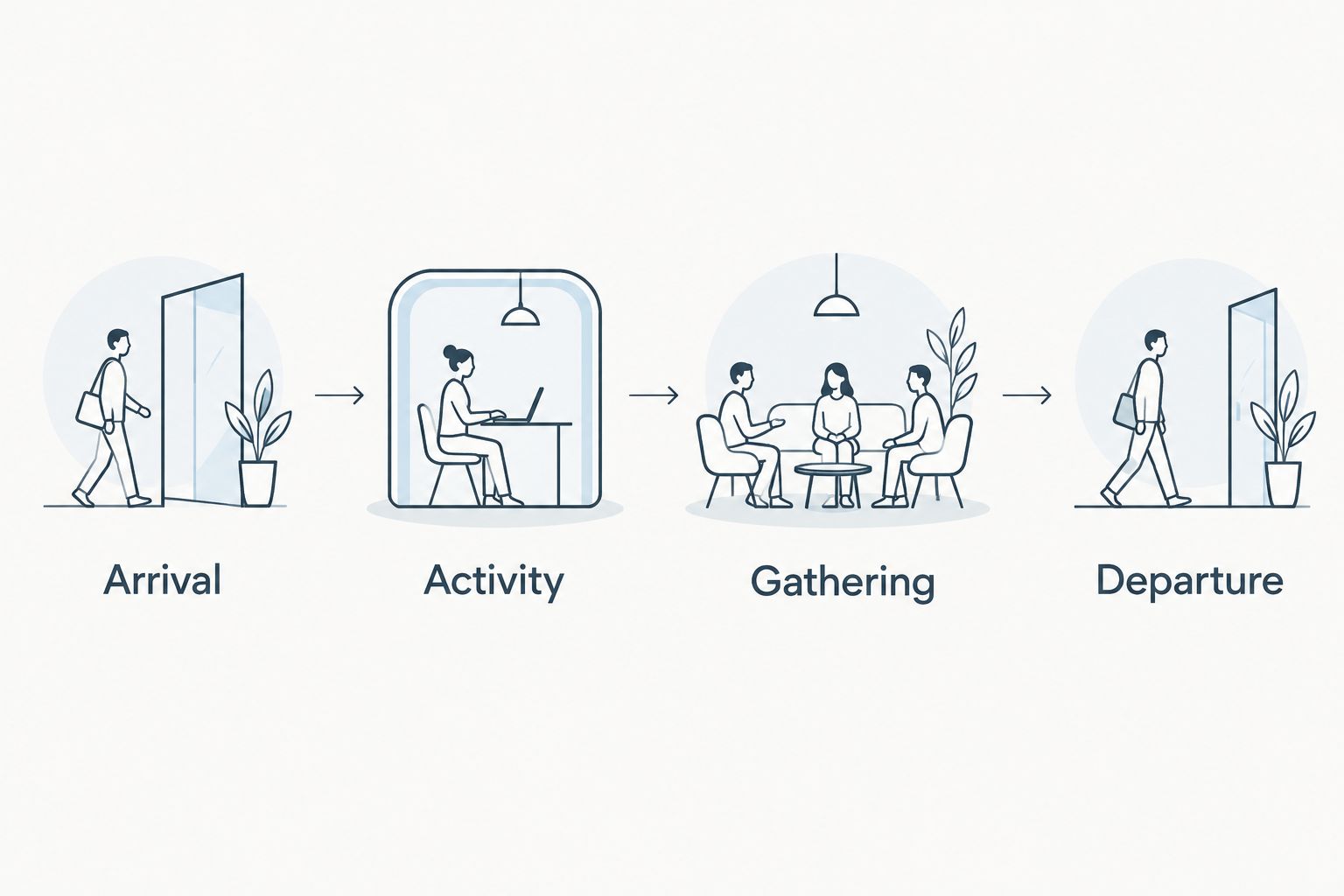
Sketch the sequence yourself before discussing it with the venue: arrival, activity, then a shared gathering. Put the gathering where both golfers and non-golfers can participate. This is the part of the plan that keeps the outing from becoming separate days for separate groups.
For your 2026 itinerary, distinguish fixed arrangements from flexible activity time. A nine-hole round still depends on playing pace and course conditions. Do not publish a precise finish time based only on the number of holes, or schedule a work presentation immediately after an assumed finish.
The sequence below is a planning framework, not a confirmed venue schedule. Use it to identify what needs agreement before colleagues receive their final itinerary.
- Arrival: share check-in instructions and the organizer's details.
- Activity: give each participant a confirmed plan.
- Gathering: bring the group together for dining or conversation.
- Departure: state how return transportation will work.
Confirm logistics before sending the final invitation
Use a checklist and written confirmations to close the practical questions. Travel, equipment, dining, accessibility, and weather arrangements belong in the plan before the invitation becomes final. A scenic mountain setting is a reason to visit, not a substitute for clear arrival instructions.
Give attendees a specific arrival destination and a named organizer. Check their starting locations before choosing shared transportation, and distinguish departure time from arrival time. Do not present an estimated drive as a guaranteed journey duration.
Boulder Creek Golf Club's public golf and dining offerings provide a place to start that conversation, but each requested group arrangement needs confirmation. In particular, ask how a change in weather or attendance affects the arrangements you are making; do not infer policies from those of another course.
- Confirm the arrival destination and check-in process.
- Resolve transport responsibilities before the day.
- Ask about walking, cart, and accessibility arrangements.
- Agree on dining details and dietary requests.
- Record the applicable weather and cancellation arrangements.
Measure participation rather than golf performance
Follow up with a short anonymous survey. Ask whether colleagues felt included, had useful time with teammates, and understood the logistics. Those answers tell you what to retain or change; a low golf score does not tell you whether the offsite served its purpose.
Use 3 feedback questions as a starting point: Did you have a comfortable way to participate? Did you spend time with colleagues you wanted to know better? What should change next time? These are suggested questions, not a validated measurement system.
Keep the review proportionate. A 2026 team outing does not need an elaborate productivity claim to justify recording what worked. Review the feedback alongside your stated purpose, and avoid attributing later business results to a single afternoon outdoors.
- Ask about inclusion across all activity choices.
- Collect logistics feedback separately from activity preferences.
- Invite comments without requiring public criticism.
- Record one concrete change for the next outing.
Compare formats for your tech team
Choose the format from your participation survey, not from the most experienced golfer's preference. The options below describe planning choices rather than bookable packages. Confirm the activities and arrangements with the venue before making a commitment.
| Option | Best for | Practical benefit | Key limitation |
|---|---|---|---|
| Casual nine-hole golf | Teams with willing golfers who want a bounded golf component | Gives the outing a clear activity without defaulting to 18 holes | Beginners still need guidance; finish time varies |
| Scramble-format golf | Mixed-experience golfers who welcome team scoring | Shares responsibility for selected shots | Competition can still deter colleagues; venue approval matters |
| Disc golf | Colleagues who specifically want a different outdoor game | Offers an activity distinct from traditional golf | Not an automatic accessibility alternative; arrangements need confirmation |
| Shared clubhouse dining | Teams prioritizing conversation, including non-golfers | Provides a common gathering around a meal | Dining does not establish private meeting space or group capacity |
| Golf plus separate non-golf participation | Teams with different activity preferences | Preserves choice while retaining a shared gathering | Requires extra coordination so neither group feels secondary |
For a wider planning checklist, see the guide to golf outings for corporate team building. Keep the distinction clear: an employee outing is not automatically a tournament, and a tournament format is not automatically the right choice for your team.
Common mistakes Silicon Valley tech teams make
Turning recreation into another work session
A planning presentation, roadmap review, and golf round compete for attention when packed into one outing. Choose whether the day is primarily recreation or a working offsite. If substantive work is required, arrange an appropriate setting rather than assuming it can happen between shots.
Making non-golfers responsible for fitting in
An invitation that offers only golf leaves colleagues to decline or improvise. Ask about preferences first and confirm a meaningful shared portion of the day. Do not assign non-golfers administrative duties while everyone else plays.
Treating experienced employees as unpaid instructors
A colleague who enjoys golf has not necessarily agreed to teach, organize equipment, and manage pace. Ask before giving that person responsibility. Get venue guidance on beginner arrangements and keep instruction separate from informal expectations.
Booking around an unverified course description
Older descriptions and restoration updates do not establish the layout for your 2026 visit. Confirm the course your group will play and the facilities included in your arrangements. Do not build an 18-hole itinerary around a public nine-hole offering.
Calling a day outing an overnight retreat
A mountain getaway does not necessarily include accommodation. Confirm lodging, transportation, and any meeting needs separately before promising an overnight experience. The invitation should describe the arrangements you have secured, not the atmosphere you hope to create.
FAQ
What's the best golf offsite format for a tech team with beginners?
A casual nine-hole round or a venue-approved scramble is a practical starting point for willing beginners. Ask about guidance and equipment, and provide a confirmed participation choice for colleagues who do not want to play.
Is Boulder Creek Golf Club suitable for a Silicon Valley team outing?
Boulder Creek Golf Club suits teams seeking public nine-hole golf, disc golf, and clubhouse dining in the Santa Cruz Mountains. Confirm group arrangements, equipment, dining needs, and accessibility before committing to an itinerary.
Do all employees need to play golf at a team offsite?
No, a team offsite does not need to require golf participation. Plan a shared gathering and confirm alternatives so colleagues who decline golf still have a meaningful place in the day.
Is disc golf an easier alternative for everyone?
Disc golf is a different activity, not a universal substitute for golf. Ask participants about their interests and confirm the physical demands, equipment, and access arrangements before recommending it.
How long should a nine-hole team golf outing take?
Set the schedule from the course's guidance for your group rather than assuming a fixed duration. Playing experience, pace, and course conditions affect the round; keep the shared gathering flexible until the arrangements are confirmed.
Can we hold a work meeting in the clubhouse?
Confirm meeting arrangements directly before including a work session. Clubhouse dining does not establish private space, presentation equipment, or permission to hold a meeting.
Does a golf getaway include overnight lodging?
A golf getaway does not automatically include lodging. Verify accommodation separately and describe the event as a day outing unless overnight arrangements are confirmed.
One last thing
Ask non-golfers to review the invitation before you send it. They can identify whether the alternative plan sounds like genuine participation or simply waiting for everyone else to finish. That is a useful final check for your 2026 offsite.
Make the invitation answer one question plainly: what will each colleague do, and when will the whole team be together? A clear answer matters more than adding another activity. Keep the golf welcoming, the arrangements factual, and the shared time protected.